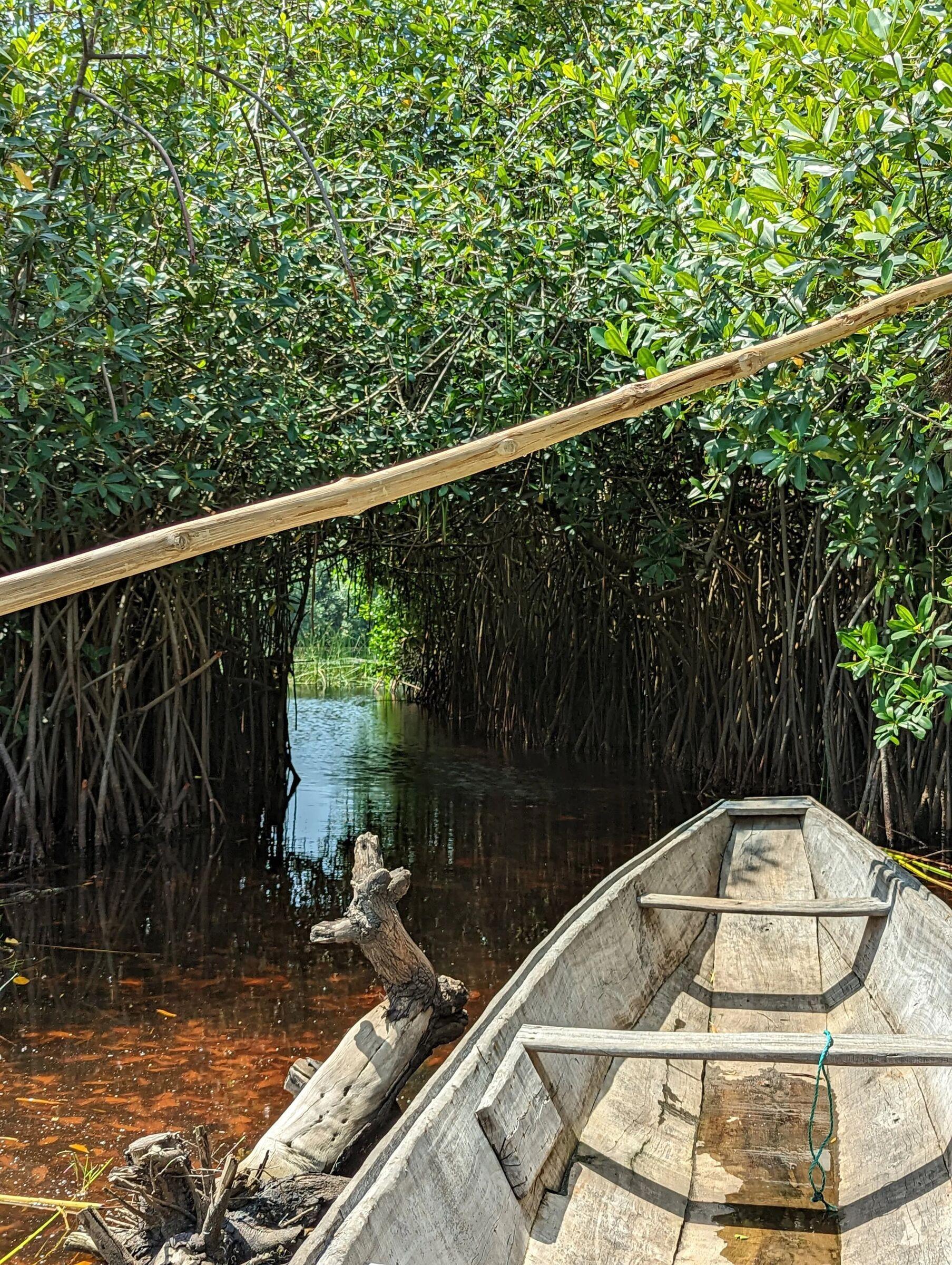
Our first fact-finding trip took us to Benin and Togo to see whether coastal restoration could fund the communities who need it most.
Neil has worked in West Africa for many years, and plenty of his local contacts wanted help turning natural resources into income for their communities. Together they looked at agricultural, aquaculture and livestock projects. Few of them could attract outside investment at scale.
A connection in Côte d'Ivoire
While working on other African projects, Neil learned that restoring natural forests could generate carbon credits, and that those credits could fund local communities. With backing from Cormac Hicks and his family investment fund, he set out on a first trip to West Africa to explore the idea.
The first stop was Benin, where Neil and Cormac met their longtime colleague Dr Christian Viaho. They had once looked at farming projects in Benin together. Christian is an expert in the local ecology, and he was already planning mangrove planting trials on Lake Nokoué. Long conversations with him helped the team see both the opportunity and the challenges ahead.
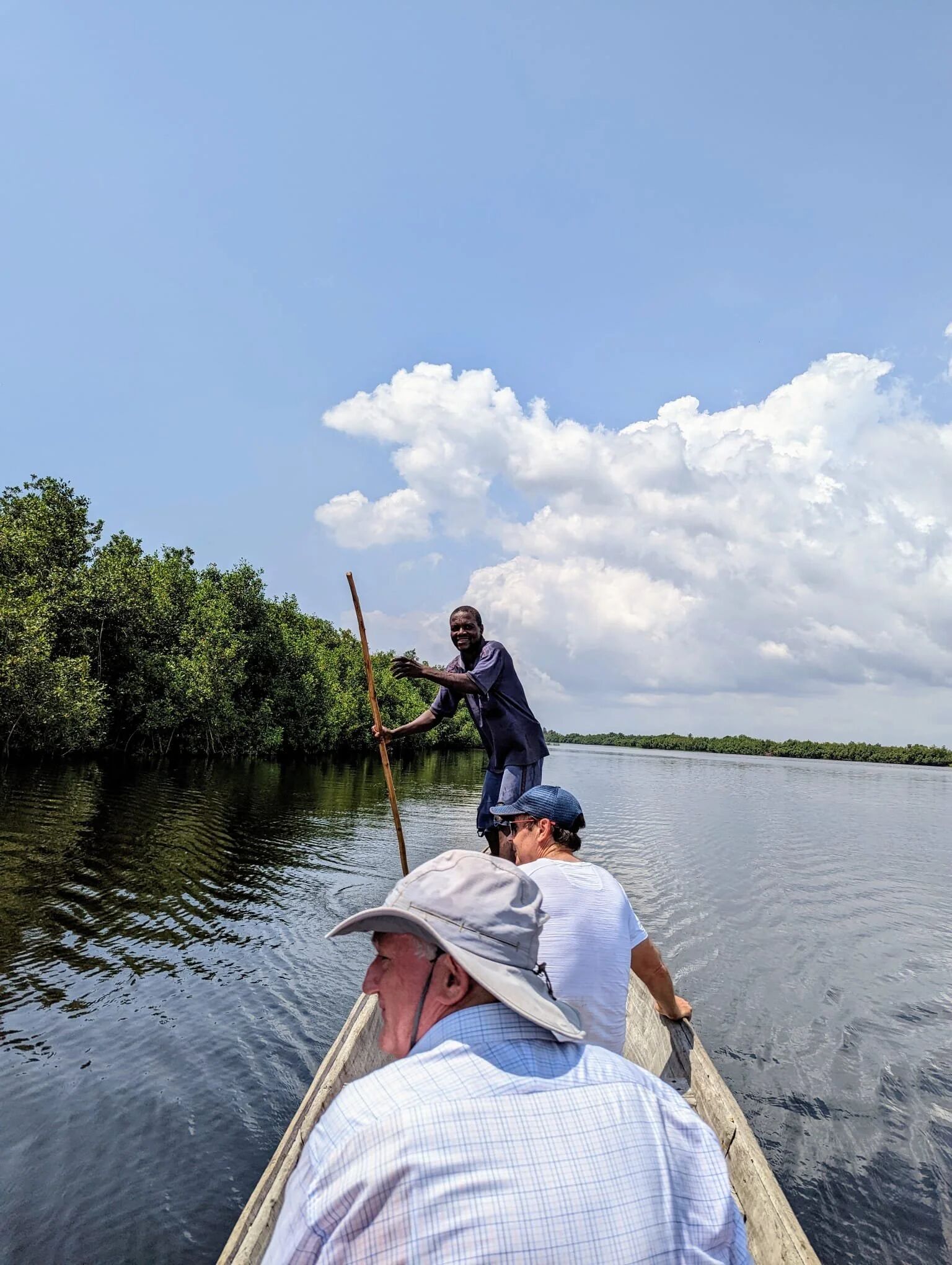
Neil then went alone to neighbouring Togo to reconnect with contacts interested in a similar restoration project.
What we learned
- Dr Viaho confirmed that a large-scale restoration programme in Benin was feasible.
- Two things pointed us to the coast: the security situation in northern Benin, and the higher value of blue carbon credits. Our focus would be planting mangroves along the shoreline and around Lake Ahémé, where Dr Viaho had started test planting.
- The southern mangroves have been heavily cut for firewood. Unless that demand is met, newly planted mangroves risk being cut again. We started looking at alternatives, including the Benin government's trials of fast-growing acacia as a substitute fuel.
- We made contact with key stakeholders in Togo and opened channels with relevant parties in Benin for ongoing partnership.